Breeze Medical
Breeze Medical
Breeze Medical
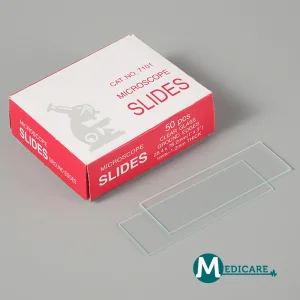
Equatorial Guinea, located on the Gulf of Guinea in Central Africa, has been undergoing a systematic transition towards modernized healthcare infrastructure. Guided by the national development strategy formulated by the Ministry of Health and Social Welfare (Ministerio de Sanidad y Bienestar Social - MINSABS), the country is prioritizing the expansion of clinical laboratories, public health monitoring systems, and tertiary educational institutions. Primary urban nodes such as Malabo on Bioko Island and Bata on the continental mainland serve as regional hubs for diagnostic laboratory services. In these specialized facilities, microscope slides represent the fundamental baseline tool required to perform critical health interventions, from tracking vector-borne tropical pathogens to diagnosing oncological malignancies.
The diagnostic environment in Equatorial Guinea presents unique geographical and epidemiological challenges. The country faces endemic exposure to malaria, lymphatic filariasis, schistosomiasis, and tuberculosis, all of which rely heavily on direct microscopic identification. Accurate staining and high-contrast visualization depend critically on the physical properties of the glass substrate. Substandard microscope slides—characterized by optical impurities, surface irregularities, or dynamic biological degradation due to humidity—directly compromise diagnostic accuracy. This can lead to false negatives in epidemiological screening and delayed patient care.
Furthermore, academic institutions such as the Universidad Nacional de Guinea Ecuatorial (UNGE) are expanding their biological sciences and pre-medical training modules. This drive has generated sustained demand for reliable, standardized teaching slides. As laboratory procurement teams, national health organizations, and bulk medical suppliers in Central Africa evaluate strategic manufacturers, the focus has shifted from commoditized, low-cost options to high-precision suppliers. Modern buyers require partners that offer certified compatibility, tropicalized packaging, and guaranteed E-E-A-T compliance (Experience, Expertise, Authoritativeness, and Trustworthiness).
From a material science perspective, a microscope slide is not merely a piece of glass; it is an engineered optical substrate designed to ensure error-free diagnostic imaging. For clinical networks operating in high-temperature environments, several parameters govern slide reliability:
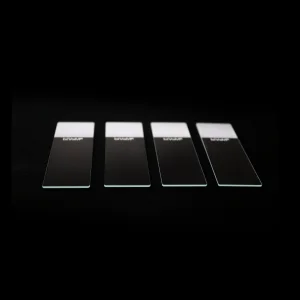
Standard diagnostics utilize soda-lime glass, which offers cost-effectiveness and good mechanical stability. However, advanced histopathology and fluorescence microscopy demand Super White Glass (often referred to as water-white glass). Super White Glass minimizes self-fluorescence and exhibits exceptional light transmission across the visible and near-ultraviolet spectrum, ensuring that delicate cellular structures stained with hematoxylin and eosin (H&E) or fluorophores are rendered with perfect color fidelity.
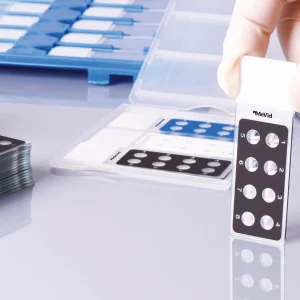
During tissue preparation, sections are prone to detaching from the slide during aggressive antigen retrieval or intensive staining protocols. Our product suite addresses this through advanced surface chemistries:
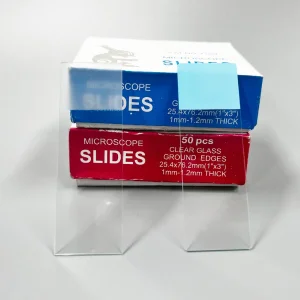
The processing of slide borders directly affects laboratory productivity and personnel safety. Premium slides are categorized by their edge treatments:
Ground Edges: Ground smooth to prevent micro-cuts during rapid, manual clinical routines.
Polished Edges: Optimized for automated liquid-handling systems and slide printers, minimizing friction and dust generation.
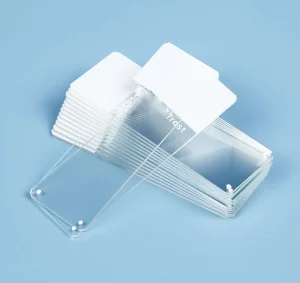
Safety Corner Profiles: Available with 90° or 45° clipped corners to minimize handling damage and streamline high-volume slide sorting.
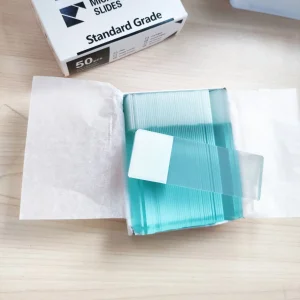
Proprietary interleaving paper and moisture-barrier packaging prevent slide adhesion and glass degradation in humid climates like Malabo.
Electrostatic and chemical coatings (Polysine/Positive Charge) prevent tissue detachment during complex, multi-step staining cycles.
Controlled glass thickness within ±0.05mm guarantees consistent focus parameters for standard brightfield and digital scanners.
Ningbo Breeze Medical Co., Ltd., founded in 2011, has established itself as a leader in the medical device industry, specializing in the manufacturing of disposable medical consumables and laboratory instruments. Committed to providing the highest quality products, the company has invested in state-of-the-art infrastructure, including a cleanroom, an automatic injection molding workshop, and a support production line that meets the strictest GMP (Good Manufacturing Practice) standards. In addition, the company has set up a Product Quality Testing Center to ensure the reliability and performance of all its products.

Since its inception, Ningbo Breeze Medical has adhered to a business philosophy centered around quality and innovation. The company follows a stringent quality management and control system that complies with international standards, ensuring that its products are reliable and safe for use in various medical applications. As a result, Breeze Medical has earned prestigious certifications such as ISO 9001:2008, ISO 13485:2003, and CE, assuring that its products meet global quality and safety standards.
Breeze Medical specializes in the manufacturing of a wide range of medical products, including disposable medical consumables and laboratory instruments used in hospitals, clinics, and research centers. Among the company's flagship products are:
These products are essential for performing medical procedures, diagnostics, and laboratory analysis, positioning Ningbo Breeze Medical as a key supplier in the healthcare sector.
The company has developed a cutting-edge processing capacity that allows it to manufacture products in large volumes without compromising on quality. Its modern production infrastructure includes advanced equipment that optimizes efficiency and precision in the manufacturing process. Additionally, the company has implemented automated production lines that ensure consistent quality and the ability to meet global market demands.
Ningbo Breeze Medical Co., Ltd. has significantly expanded its presence in both domestic and international markets. Its products are widely available and in high demand across various countries, reflecting the growing trust in the brand. The company's success in global markets demonstrates its ability to offer innovative, high-quality products to customers worldwide. We provide seamless shipping solutions to the ports of Malabo and Bata, ensuring secure delivery of critical supplies to Equatorial Guinea.
Scientific research is a key pillar of Breeze Medical's innovation. The company continuously invests in developing new technologies and products that contribute to improved healthcare. Additionally, it boasts a team of highly skilled technical support engineers who provide 24/7 assistance to address any customer inquiries or needs, ensuring professional and timely service at all times.

Equatorial Guinea features a tropical rainforest climate, with high annual rainfall and relative humidity levels exceeding 80% throughout the year. For glass laboratory consumables, high relative humidity poses a serious threat of chemical degradation. Over time, moisture can accumulate between closely packed glass slides. In standard packaging, this moisture induces alkaline corrosion of the glass surface, leading to a phenomenon known as "slide sticking." Once slides adhere to one another, separation becomes difficult without causing surface abrasions, micro-cracks, or optical cloudiness. These defects scatter light and render the slide useless under high-magnification microscopy.
To address this challenge, Ningbo Breeze Medical Co., Ltd. has developed specialized tropical packaging protocols. Each production batch undergoes rigorous sealing processes to isolate the slides from atmospheric moisture:
Interleaving Clean Paper: Every slide is separated by premium, lint-free chemically inert interleaving paper. This paper acts as a mechanical separator and moisture buffer, preventing glass-to-glass contact.
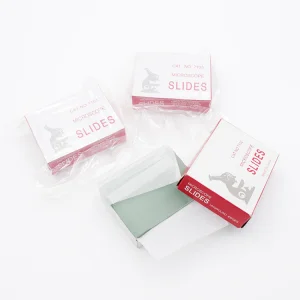
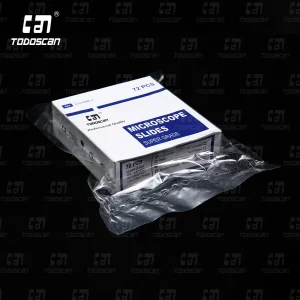
Double-Vacuum Hermetic Sealing: The slides are shrink-wrapped in high-density polyethylene (HDPE) barriers and vacuum-packed. This packaging includes medical-grade silica desiccants to absorb any residual moisture.
Reinforced Corrugated Outers: Outer cartons are lined with water-repellent polymers, shielding the consignment from rain and sea spray during maritime transit to the ports of Malabo or Bata.
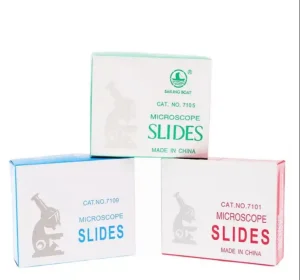
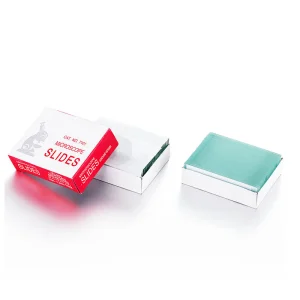
This technical dedication guarantees that when our partners open a pack of Breeze Medical microscope slides in a clinical setting in Bata or a remote lab in Annobón, they receive pristine slides free of haze, dust, or mold.
Equip your laboratory networks in Malabo, Bata, and beyond with high-clarity, tropicalized, and ISO-compliant glass diagnostic solutions.