Breeze Medical
Why use plastic test tubes instead of glass tubes? In many laboratories, the answer comes down to handling, breakage risk, and the demands of a specific procedure. Plastic tubes are lighter to carry, easier to store in bulk, and less likely to shatter if dropped beside a benchtop. That matters. A technician transferring samples between racks may also appreciate tubes designed for quick, routine use. Some plastic options, such as polypropylene, tolerate certain temperature ranges and chemical conditions, but performance depends on the product and its stated specifications.
Plastic tubes can be useful for single-use workflows, where discarding a tube may reduce cleaning steps and the chance of carryover. They can also be a practical choice when many samples need labeling, sorting, or transport. Yet plastic is not automatically safer or better. Some solvents, temperatures, and handling methods can damage particular plastics, while glass may suit procedures requiring greater heat resistance or a reusable vessel. Always check the tube manufacturer’s compatibility and centrifugation limits before use. Small details matter.
The best choice depends on the sample, equipment, and protocol—not just price or convenience. Glass can be durable when handled carefully, and plastic can fail if used outside its rated conditions. Even experienced users can overlook a specification when work becomes routine. That is worth reflecting on. A careful material choice supports reliable results, but it cannot replace good labeling, sound handling, and appropriate laboratory procedures.
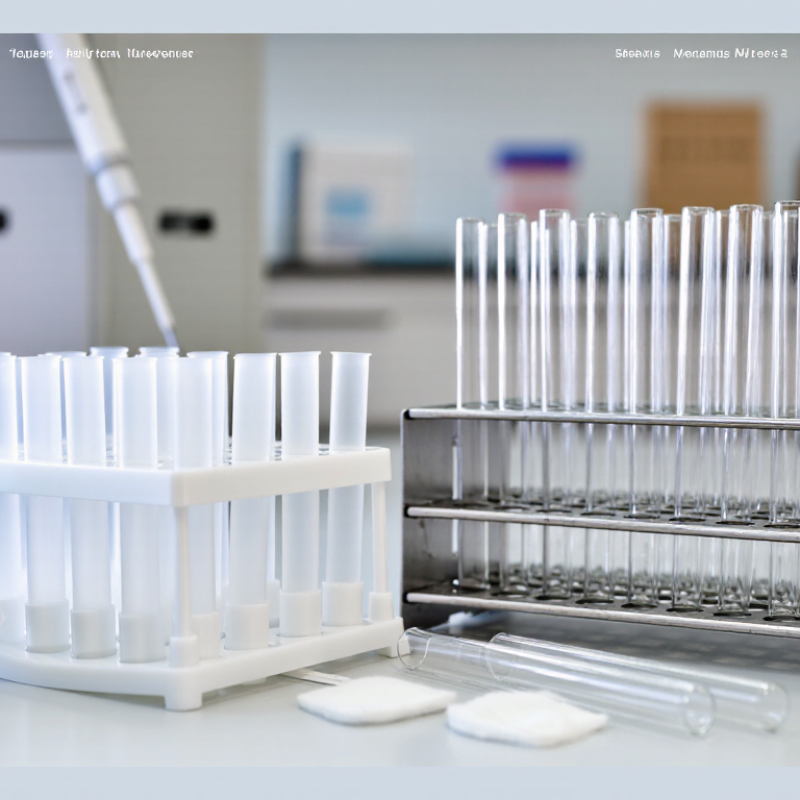
Plastic test tubes are commonly molded from polypropylene (PP) or polystyrene (PS). PP is a semicrystalline polymer made from propylene units. Its low density and resistance to many chemicals suit routine handling. PS is clear, so a sediment line is easy to inspect, but it is more brittle. Not all plastics tolerate heat or solvents equally. Check the tube’s material and stated use, not just its shape. That sounds simple. It isn’t.
Glass tubes are often made from borosilicate or soda-lime glass. Borosilicate contains silica and boron oxide, often with alumina and other oxides; its low thermal expansion helps it withstand temperature changes. Soda-lime glass contains silica, sodium oxide, and calcium oxide, and is generally less resistant to sudden heating. PlasticsEurope’s Plastics – the Fast Facts 2023 reports global plastics production of 400.3 million tonnes in 2022. This is a broad manufacturing figure, not a measure of laboratory-grade tube production or purity. That distinction matters. Glass formulations also vary, and clarity alone does not guarantee chemical inertness. PP may handle routine use well; glass can offer dimensional stability and repeated cleaning. But “plastic” is not one material, and neither is “glass.”
Plastic and glass tubes feel different before a sample even enters them. Typical engineering-property data compiled by MatWeb put polypropylene density near 0.90 g/cm³ and borosilicate glass near 2.23 g/cm³. That lower mass makes plastic tubes easier to carry in a full rack, especially when gloved hands are damp. They are also less likely to shatter if knocked against a bench. A small practical difference.
Glass offers a firmer, more dimensionally stable surface, and it tolerates many cleaning chemicals and repeated heat cycles. Plastic can flex under pressure, but that same flexibility may help it survive a minor impact. ASTM D5276 describes free-fall drop testing for loaded containers; it does not establish that every plastic tube outperforms every glass tube. Material, wall thickness, and test conditions matter. Not always. For routine handling, check the tube’s stated temperature and chemical limits before choosing it. Some plastics can deform or interact with particular solvents, while glass can chip at the rim after repeated use. That detail is easy to overlook. The density figures are typical material values, not measurements for every finished tube, so compare the actual product specifications when fit and breakage risk matter.
| Comparison Factor | Plastic Test Tubes | Glass Test Tubes |
|---|---|---|
| Breakage and impact | Many plastic tubes, especially polypropylene (PP), resist impact better than glass and are less likely to create sharp fragments if dropped. They can still crack, deform, or puncture depending on the material and wall thickness. | Glass is rigid but can crack or shatter after impact. Broken glass presents a cut hazard and requires careful cleanup and disposal. |
| Weight and handling | Generally lightweight, making plastic tubes convenient to carry and handle in batches. Their lower mass can also reduce shipping weight. | Generally heavier than comparable plastic tubes. Glass may be preferred when rigidity and a firm, stable feel are important. |
| Heat tolerance | Heat tolerance varies by polymer. PP tolerates more heat than many common plastics, but tubes may soften or deform at elevated temperatures. Check the product’s rated temperature and sterilization instructions. | Borosilicate glass typically tolerates higher temperatures and thermal changes better than common plastic tubes. Ordinary glass may not have the same heat resistance; confirm the glass type and intended use. |
| Chemical compatibility | Compatibility depends on the plastic, chemical, concentration, temperature, and contact time. Some solvents can swell, craze, or damage certain plastics, so consult a compatibility chart before use. | Glass is compatible with many laboratory chemicals, but it is not universally resistant. For example, hydrofluoric acid attacks glass, and strong alkaline solutions can damage it over time. |
| Visibility and sample observation | Clear plastic tubes allow visual inspection, though optical clarity can vary. Some plastics may scratch or become cloudy with use or exposure to chemicals. | Clear glass generally offers good visibility and a hard surface that resists scratching in routine handling. Surface condition and glass type can affect performance. |
| Leak resistance and closure | Leak resistance depends on the tube design and its cap or closure. Flexible walls may be easier to squeeze, but the tube should not be assumed leakproof unless specified by the manufacturer. | Glass tubes can provide a rigid container, but leak resistance also depends on the closure, fit, and tube design. Inspect glass for chips or cracks before use. |
| Reuse and cleaning | Some plastic tubes are designed for single use; others may be reusable within stated limits. Repeated washing, heat exposure, or chemical contact can affect their condition. | Many glass tubes can be washed and reused if they are designed for reuse and remain free of damage. Cleaning and sterilization methods should suit the glass type and application. |
| Typical practical advantage | Often a practical choice when reduced breakage risk, low weight, and convenient handling are priorities, provided the plastic is compatible with the sample and procedure. | Often a practical choice when higher heat tolerance, rigidity, or compatibility with a particular sample is required, provided the risk of breakage is managed. |
Selection note: Tube performance depends on the specific material, design, and intended conditions. Check the tube’s specifications for chemical compatibility, temperature limits, sterilization suitability, and reuse guidance before use.
Plastic test tubes can make routine handling safer by reducing the risk of cuts from broken glass. They are light, easy to carry, and less likely to shatter if dropped on a bench or tray. That matters in busy classrooms and laboratories where samples move between workstations. Some tubes arrive with fitted caps, helping limit spills during short transfers. Still, plastic is not automatically safer. A loose cap or a cracked tube can cause problems too.
Convenience shows up in small details. A rack of plastic tubes is easier to move, and disposable options can reduce washing time between tasks. Many are clear enough to check liquid levels or observe a sample. But clarity and durability vary. Certain plastics may deform with heat or react poorly to specific solvents, so users should check the tube’s material and temperature limits before use. Small step. Worth doing.
Glass remains useful when heat resistance, chemical compatibility, or repeated reuse is important. Plastic tubes can also be less suitable when trace substances may cling to the inner surface or affect results. The choice depends on the sample and the procedure, not just convenience. In practice, a quick review of the test method and product specifications can prevent a tube from becoming the weakest part of the workflow.
Plastic tubes can be lighter and less likely to shatter, but heat tolerance depends on the resin, not just the tube’s appearance. Polypropylene often suits routine warm-water baths and some sterilization cycles, while other plastics may soften, warp, or become brittle. Check the stated temperature limit for the exact tube and exposure time. A tube that survives a brief heating step may not withstand repeated cycles.
Glass, especially borosilicate, generally handles higher temperatures and many solvents well. It is not indestructible: sudden temperature changes can crack it, and strong alkaline solutions can gradually damage its surface. Plastic compatibility also varies. Some solvents may swell or weaken certain plastics, while prolonged contact can affect sample recovery. Small details matter. A cap, seal, or stress mark may fail before the tube itself does.
Match the tube material to the chemical, concentration, temperature, and contact time. Review compatibility data for the specific resin, then consider a small trial when results are important. I’ve seen material choices treated as a simple glass-versus-plastic decision; that misses how much the heating method and cap design matter. When conditions are uncertain, choose a more conservative temperature and inspect tubes for softening, leaks, or discoloration after exposure.
How to read this chart: “Typically suitable” indicates a material commonly used for a standard 121°C steam-autoclave cycle. Polypropylene tubes must be specifically rated for autoclaving; polystyrene tubes are generally not autoclavable. Borosilicate glass is commonly autoclavable. Chemical resistance depends on the exact chemical, concentration, temperature, and tube design, so check the tube manufacturer’s compatibility guidance before use.
Plastic test tubes are common in laboratories because they are lightweight, easy to handle, and less likely to break when dropped. In teaching labs, they hold small volumes of water, prepared reagents, or biological samples during routine exercises. Their clear walls make it easy to see color changes, settling, or cloudiness. Small details matter.
In clinical and research settings, disposable plastic tubes can reduce the chance of carrying residue from one sample to another. They are often used for short-term sample collection, mixing, and transfers, provided the tube is designed for the sample and procedure. Some types can be used in centrifuges, but staff should check the tube’s stated speed and rotor compatibility. Not every plastic tube is suitable.
Plastic tubes also travel well between benches, storage racks, and collection sites. A technician can label the side, cap the tube, and place it in a rack without handling fragile glass. Still, plastic has limits. Certain solvents, high temperatures, or long storage periods may affect the material or sample. I have seen routine choices treated as automatic; they shouldn’t be. Matching tube material to the sample, temperature, and test method helps protect results.
They are often made from polypropylene or polystyrene. Polypropylene is lightweight and resists many chemicals. Clear polystyrene makes sediment lines easier to inspect, but it is more brittle.
Common types include borosilicate and soda-lime glass. Borosilicate generally handles temperature changes better. Soda-lime glass is less resistant to sudden heating.
Polypropylene often suits routine warm-water baths. Check the exact tube’s temperature limit and exposure time. A brief heating step does not prove it can handle repeated cycles.
No. Sudden temperature changes can crack glass, including borosilicate. Heat slowly, and inspect tubes for damage.
No. Glass formulations vary, and clarity does not prove chemical inertness. Strong alkaline solutions can gradually damage some glass surfaces.
Match the material to the chemical, concentration, temperature, and contact time. Review compatibility data for the specific plastic resin. When results matter, try a small sample first.
Look for softening, warping, leaks, cracks, or discoloration. A cap or seal may fail before the tube does. Small details matter.
Not always. Plastic is often lighter and less likely to shatter, but some types may soften or weaken. The simple answer feels tempting; it leaves out exposure conditions.
Why use plastic test tubes instead of glass tubes? The choice depends on the needs of the experiment. Plastic tubes are generally lightweight and less likely to break if dropped, making them easier to handle, store, and transport. They can also reduce the risk of cuts and spills caused by broken glass, which is useful in busy laboratory settings. Glass tubes, however, are often preferred when experiments require high heat or resistance to particular chemicals.
Plastic and glass tubes are made from different materials, so their durability and compatibility vary. Before selecting a tube, consider the sample, chemicals, temperature, and any required handling or disposal procedures. Plastic tubes are commonly used for sample collection, temporary storage, mixing, and routine laboratory tasks when their material is suitable. Choosing the right type helps support safe, convenient, and reliable work.
