 Breeze Medical
Breeze Medical
Breeze Medical
Cleaning reusable laboratory glassware is crucial for maintaining integrity in scientific research. Proper cleaning ensures accurate results and prevents cross-contamination. Recent studies indicate that up to 30% of lab errors can be traced back to improper cleaning techniques. Thus, understanding how to clean reusable laboratory glassware properly is essential.
Laboratories handle a variety of chemicals and biological materials. Residue left on glassware can distort experimental outcomes. Industry reports emphasize that thorough cleaning can also extend the life of glassware, reducing costs for laboratories. It’s reported that improper maintenance can increase repair costs by 20% over time. Many researchers overlook simple cleaning methods that could prevent such unnecessary expenses.
Despite the apparent need for diligence, many labs still struggle with standardized procedures. Some staff may skip essential steps when cleaning. A reflection on these practices is important. Implementing consistent cleaning protocols will enhance both safety and efficiency in laboratory work. In the quest for quality results, embracing best practices in cleaning is a vital yet sometimes neglected aspect.
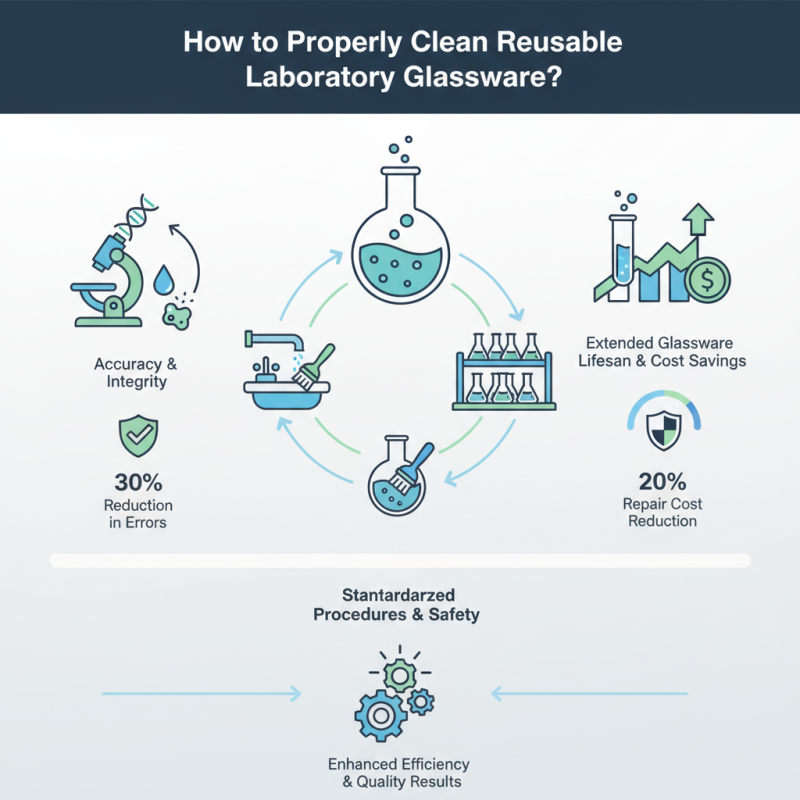
Cleaning laboratory glassware is crucial for maintaining accuracy in experiments. Contaminated glassware can yield unreliable results. Residual chemicals may interact and skew findings, leading to significant errors. Each piece of glassware, whether it's a beaker or a pipette, deserves careful attention. Rinsing with water often isn't enough. Cleaning agents that break down different residues are essential.
Proper cleaning requires a systematic approach. Soaking glassware in an appropriate detergent can help. After that, scrubbing is necessary. Pay close attention to narrow-necked vessels; residues may hide in hard-to-reach areas. Rinsing thoroughly is vital. Even trace amounts of soap can distort measurements. It's all about precision, and every detail matters.
Many labs overlook the cleaning process's importance. Some might prefer quick solutions, but this can lead to mistakes. Reflection on procedures is needed. Regular training sessions can help reinforce the cleaning protocols. It's not just about cleaning; it's about ensuring every experiment is reliable and valid. Taking glassware cleaning seriously can enhance your lab's overall credibility.
: Clean glassware ensures accurate results. Contamination can lead to significant inaccuracies in experiments.
Detergents, acids, and alkali solutions are frequently used. Each has its own strengths and weaknesses.
Detergents can remove 95% of organic residues. However, they may leave behind some residues if not rinsed thoroughly.
Consider using a solvent wash like acetone. Always remember to rinse properly afterward to avoid residues.
Store glassware upright or in a rack. Avoid stacking, as this can cause scratches and cracks.
Dust and residues can compromise the cleanliness of glassware. Routine inspections help maintain optimal storage conditions.
Use strong acids with caution. Follow safety protocols and ensure proper dilution and rinsing to protect the glassware.
Be mindful of handling practices. Poor handling can introduce contaminants that affect experimental outcomes.
Not rinsing thoroughly is a frequent error. Residues can affect future experiments, leading to unreliable results.
Regularly reflect on your cleaning and storage methods. Find ways to enhance efficiency and effectiveness for better results.
Cleaning reusable laboratory glassware is crucial for maintaining accurate and reliable results in experimental settings. Understanding the importance of accurate glassware cleaning in labs ensures that cross-contamination is minimized and experimental integrity is upheld. In this context, it is essential to know how to clean reusable laboratory glassware properly using appropriate cleaning agents, including a comparative analysis of various detergents and solvents.
The process involves a detailed step-by-step procedure, from rinsing and applying cleaning agents to thorough drying. Additionally, employing autoclaving and sterilization techniques can further enhance glassware disinfection. To prevent contamination post-cleaning, best practices for storing clean glassware, such as utilizing dedicated storage solutions and maintaining a clean environment, should be followed. By adhering to these guidelines, laboratory professionals can ensure that their glassware is not only clean but also safe for repeated use.
