Breeze Medical Breeze Medical

How to Handle Biohazard Specimen Bags Safely in 2026?

Time:2026-11-22 Author:Mason
0%

Biohazard specimen bags are a small part of clinical work, but a poor seal can expose staff, patients, and transport teams to infectious material. The World Health Organization estimates that about 15% of healthcare waste is hazardous, including infectious waste (WHO, Health-care Waste fact sheet, 2024). That proportion makes careful segregation and containment essential. Small details matter.

How to handle biohazard specimen bags in clinical settings depends on the specimen, the container, and the approved facility procedure. The CDC and NIH’s Biosafety in Microbiological and Biomedical Laboratories, 6th edition, emphasizes appropriate containment and safe handling practices. In practical terms, staff should check that the primary specimen container is closed and free of visible leaks, then use the designated secondary packaging and absorbent material when required. Keep paperwork separate from the specimen compartment. Never treat a biohazard label as a substitute for secure packaging.

A routine handoff can be more revealing than a written policy: a damp bag, a loose cap, or a requisition tucked beside a tube signals a process worth reviewing. Still, appearance alone cannot confirm safety. Training, suitable bags, and consistent checks all help reduce preventable exposure. Procedures vary by specimen and setting, so this guide focuses on cautious, evidence-informed habits rather than one universal checklist. One point deserves reflection: rushed staff may know the procedure yet miss a small leak. That gap matters.
How to Handle Biohazard Specimen Bags Safely in 2026?

Identify the Specimen and Confirm Applicable Biosafety Requirements

How to Handle Biohazard Specimen Bags Safely in 2026?

Before handling a specimen bag, read its label and accompanying paperwork. Confirm the specimen type, source, collection date, and any stated hazard or handling instructions. Match the identifiers on the bag and paperwork; a mismatch needs clarification. Check the seal and bag for tears, moisture, or visible leakage. A label can still be incomplete. That detail is easy to overlook.

Tips: Keep the bag upright in secondary containment. Wear the PPE specified by your facility’s current procedure. Never open a specimen bag just to identify its contents.

Requirements can differ by specimen, task, facility, and location. Check current workplace procedures and applicable biosafety guidance before transport, storage, or processing. Do not guess based on bag color alone. If the label is unclear, the container is damaged, or the required precautions are uncertain, pause handling and contact a supervisor or biosafety professional. Keep the item secured while awaiting instructions. For a leak, avoid further movement and follow your site’s spill-response procedure. A quick pause is safer than a confident guess.

Choose a Compatible Biohazard Specimen Bag and Check Its Condition

How to Handle Biohazard Specimen Bags Safely in 2026?

Choose a bag designed for the specimen, handling process, and storage conditions. Check the manufacturer’s instructions for material compatibility and temperature limits. A bag that looks sturdy may still be unsuitable for a particular container or transport setup. Match its size to the specimen container, leaving room to close it without forcing the seal. Keep absorbent material nearby when procedures call for it.

Inspect each bag before use under good lighting. Look for tiny punctures, split seams, cloudy areas, or a damaged closure. Check that labels can be read and will stay attached if the surface becomes damp. Do not use a bag if its condition is uncertain; follow your workplace procedure for replacing it. Easy to miss.

Tips: Keep bags dry and stored away from sharp objects. Avoid overfilling, and close the seal fully. If the closure catches or the bag stretches, stop and choose another one. A quick check can feel repetitive, but rushing it is an easy mistake to make. When requirements are unclear, ask your supervisor or consult the relevant handling procedure.

Place and Seal the Specimen Using Safe Handling Practices

How to Handle Biohazard Specimen Bags Safely in 2026?

Place and Seal the Specimen Using Safe Handling Practices

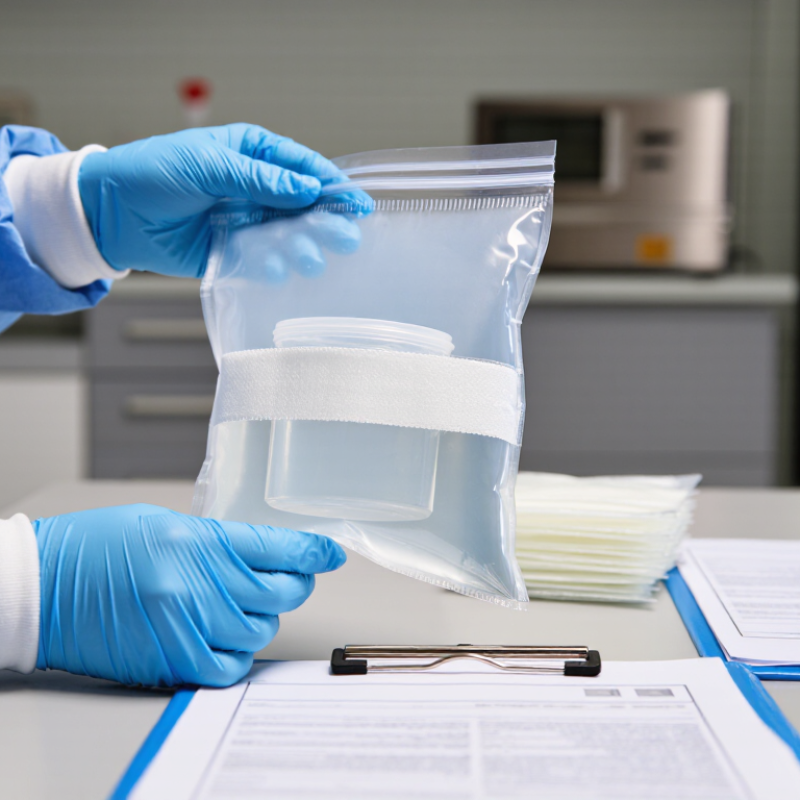
Put on appropriate gloves and check that the specimen container is closed, intact, and dry. Place it upright inside the bag’s leakproof compartment; keep requisition forms in the separate outer pocket. Add absorbent material when required by your facility’s procedure. Do not force an overfilled bag shut. A clean seal matters.

Press the closure firmly along its full length, then inspect the seam and corners for gaps or moisture. If the outside is contaminated or the bag is damaged, avoid carrying it against your clothing; follow your facility’s spill and repackaging procedure. CDC’s 2008 sharps-injury prevention workbook cited an estimated 385,000 needlestick and other sharps injuries among U.S. hospital-based healthcare personnel each year. That historical estimate is a reminder to keep sharps out of specimen bags and use a tray or cart when moving samples.

Tips: Label the specimen before bagging, verify the patient identifiers against the request, and keep the sealed bag upright during handoff. Change gloves if contaminated, and clean the work surface afterward. I still pause to check the closure twice; it takes a moment, and rushed checks can miss a folded edge. Follow current workplace procedures and the receiving laboratory’s packaging instructions.

Label, Store, and Transport the Sealed Bag Correctly

Treat each specimen as potentially infectious, and follow your facility’s current procedures. Label the bag clearly with required identifiers and hazard information before storage or transport. Keep paperwork in the separate document pouch, never loose beside the specimen. Seal the bag fully, then check the closure and exterior for moisture, tears, or contamination. A small crease can be easy to overlook. Do not guess.

Store sealed bags in the designated, access-controlled area. Use the temperature and time limits specified for the specimen and your facility’s procedure; requirements can differ. Keep bags upright in a leak-resistant secondary container, away from food and personal items. Avoid overfilling storage trays, since pressure can weaken closures. If a bag is damaged, do not handle it as though it were intact. Follow your site’s spill or exposure procedure and contact the responsible supervisor.

For transport, place the sealed bag inside a secure secondary container that can contain leaks. Keep it upright and protect it from crushing, heat, and unnecessary movement. Confirm the destination and handoff details before departure. At delivery, pass it directly to an authorized recipient and report any damage or delay. Rushing makes omissions more likely. A final visual check takes seconds, but it should never replace the written procedure.

Respond to Leaks and Dispose of Used Bags Safely

If a biohazard specimen bag leaks, stop nearby work and keep others clear. Do not squeeze it or lift it by the wet seam. Use the PPE listed in your facility’s spill procedure. Place the damaged bag inside a compatible, leak-resistant secondary container. Treat visible liquid as a spill: apply the approved disinfectant and follow its stated contact time. Avoid splashing. Broken glass? Never pick it up by hand; use tools designated by your site.

Seal the outer container, label it according to local procedures, and use the designated biohazard-waste route. Do not put it in ordinary trash or reopen it to sort contents. The World Health Organization’s 2024 Health-care waste fact sheet estimates that about 15% of healthcare waste is hazardous. That figure is a reminder to segregate carefully, not a reason to guess. Record the spill and disposal route under your site procedure, and seek occupational-health advice after possible contact. Wash your hands after removing gloves. One easy-to-miss detail: check the outside of the secondary container for contamination before moving it.

How to Handle Biohazard Specimen Bags Safely in 2026? - Respond to Leaks and Dispose of Used Bags Safely

Situation or Step Safe Action Avoid Key Reminder
Before handling a specimen bag Follow your facility’s biosafety procedures. Put on the required PPE, such as gloves and a protective gown, based on the specimen and task risk. Handling a bag with bare hands or using PPE that is torn, wet, or contaminated. Use hand hygiene after removing gloves and whenever hands may have been contaminated.
Checking and carrying a bag Check that the bag is intact, closed, and clearly identified. Carry it upright in a secure secondary container when required by facility procedure. Carrying an open, damaged, or visibly contaminated bag by hand through shared areas. Keep specimen paperwork in the designated separate pocket when the bag has one.
Bag is leaking or damaged Stop handling and restrict access to the affected area. Alert the supervisor or designated biosafety contact, then follow the facility’s spill-response procedure. Squeezing, shaking, opening, or attempting to transfer the specimen from the leaking bag. If there is immediate danger or a significant spill, follow the site’s emergency procedures.
Containing a leak Only trained personnel should respond. Wear the PPE specified by the spill procedure and place the leaking bag in a compatible, leakproof secondary container. Using a secondary container that is damaged, unsuitable, or unable to close securely. Manage any released material using the facility’s approved spill kit and procedures.
Cleaning a spill Use an approved disinfectant according to its label and the facility’s required contact time. Clean and disinfect affected surfaces as directed by the spill procedure. Mixing chemicals, guessing contact times, or applying disinfectant in a way that could splash or spread contamination. Use only disinfectants and methods approved for the material and surface involved.
Used bag with no leakage Close the bag securely and place it in the designated regulated medical or biohazard waste stream, as required by facility policy and local rules. Putting biohazard waste into ordinary waste or recycling unless specifically permitted by applicable rules. Waste requirements can differ by location and facility; follow the applicable procedure.
Bag contaminated on the outside Handle it as contaminated. Follow the site’s instructions for decontamination or placement in a suitable secondary container and waste stream. Wiping the bag casually and returning it to routine use. Do not reuse single-use specimen bags.
Closing and storing waste Secure waste containers when required and keep them in the designated area pending collection or treatment. Overfilling containers, leaving waste accessible, or compressing bags by hand. Use approved containers and follow pickup, labeling, and storage procedures.
After a leak or exposure Report the incident promptly and follow the facility’s exposure-assessment and medical follow-up procedures. Delaying a report or deciding on your own that an exposure does not need assessment. Follow local reporting requirements and your organization’s incident process.

Important: This table is general guidance, not a substitute for training, a site-specific biosafety plan, product instructions, or applicable regulations. Follow your organization’s current procedures for specimen transport, spill response, and biohazard waste disposal.

FAQS

What should I check before placing a specimen in a bag?

Wear suitable gloves. Check that the container is closed, intact, and dry. Keep it upright.

Where should paperwork go?

Place forms in the separate outer document pocket. Keep them away from the specimen compartment. No loose papers.

How can I confirm the bag is sealed?

Press the closure along its full length. Inspect the seam and corners for gaps, folds, or moisture. I still check twice; a crease can hide.

What should I do if the bag is overfilled or damaged?

Do not force an overfilled bag shut. If it is damaged or contaminated outside, follow your facility’s spill or repackaging procedure.

How should sealed bags be stored?

Use the designated access-controlled area. Follow the specified temperature and time limits, and keep bags upright in a leak-resistant secondary container.

What matters during transport and handoff?

Protect the bag from crushing, heat, and unnecessary movement. Confirm the destination, then hand it directly to an authorized recipient.

What should I do if a bag leaks?

Stop nearby work and keep others clear. Do not squeeze it or lift it by a wet seam. Follow your facility’s spill procedure.

How should used bags be disposed of?

Place damaged bags in a compatible, leak-resistant secondary container. Use the designated waste route, record the disposal as required, and wash your hands after removing gloves. Don’t guess.

Conclusion

How to handle biohazard specimen bags in clinical settings begins with identifying the specimen and following the biosafety procedures appropriate to its contents. Select a bag designed for the intended specimen and check that it is intact, clean, and securely closable. Using suitable protective equipment and careful handling practices, place the specimen inside without contaminating the bag’s exterior, then close it fully. If secondary containment is required, use it according to workplace procedures.

Clearly label the sealed bag with the required specimen and handling information, while protecting any accompanying paperwork from contamination. Store and transport it under the conditions specified by the facility, keeping it secure and separated as needed. If a bag leaks or is damaged, avoid direct contact, restrict access to the affected area, and follow the facility’s spill-response procedure. Dispose of used bags through the designated waste stream, and perform hand hygiene after handling.

Mason

Mason

Mason is a seasoned marketing professional with a deep expertise in the company's offerings and a passion for driving brand awareness. With a strong background in digital marketing strategies, he has an innate ability to connect with diverse audiences and effectively communicate product benefits.......