Breeze Medical
Sensitive PCR assays can detect a few target molecules, but that strength creates a contamination risk. A single aerosolized droplet may contain enough amplified DNA to distort a later result. This risk is especially visible when opening tubes after amplification or pipetting low-copy samples.
Why use a filter tip for sensitive PCR assays? The answer begins with aerosol control. A filter tip places a porous barrier between the liquid path and the pipette shaft. It can reduce liquid carryover and help protect internal pipette components from contamination. However, it is not a complete barrier. Poor technique still matters.
The Minimum Information for Publication of Quantitative Real-Time PCR Experiments (MIQE) guidelines emphasize contamination control, assay validation, and transparent reporting. ISO 20395:2019 also highlights the need for validated nucleic-acid amplification procedures and controlled laboratory practices. CDC’s Biosafety in Microbiological and Biomedical Laboratories guidance supports risk-based engineering and procedural controls, including careful handling of aerosols.
In practice, a technician may use filter tips while transferring a low-copy template beside negative controls. The tip should fit correctly, remain above the liquid surface, and change between samples. A clean bench helps too.
Filter tips are useful, not magical. They cannot repair a contaminated reagent, careless pipetting, or poor workflow separation. This is where many explanations become too simple. Reliable PCR results require compatible tips, calibrated pipettes, unidirectional movement, controls, and documented verification. Their value increases when every small detail receives attention.
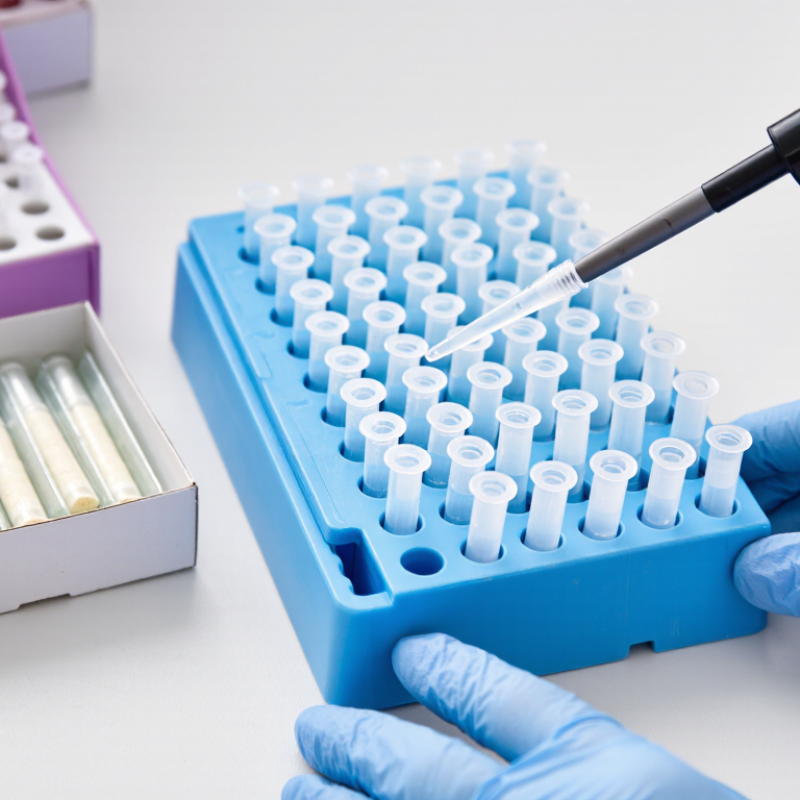
A filter tip is a pipette tip with a small, porous barrier near its upper end. In sensitive PCR assays, it helps block aerosols from entering the pipette shaft. Those aerosols may contain amplified DNA or sample material. Even a tiny carryover can produce an unexpected signal.
Filter tips are especially useful when handling low-copy targets, open reaction tubes, or repeated pipetting steps. Keep the tip above the liquid surface. Touching the sample can wet the filter and reduce reliable airflow. Change tips between samples, reagents, and controls. A filter cannot repair poor technique.
Small details matter. Use a calibrated pipette and steady aspiration speed. Avoid forceful dispensing that creates droplets. Separate pre-amplification and post-amplification areas whenever possible. Negative controls should remain free of target signal. If contamination appears, inspect the workflow instead of blaming the tip immediately.
Not every filter tip performs identically. Fit, filter material, and manufacturing consistency can affect pipetting behavior. Some tips may increase resistance near their maximum volume. That can make small transfers less precise. I would verify recovery and repeatability with the actual pipette, liquid, and volume range. The filter is useful, but it is only one layer of contamination control.
In sensitive PCR assays, a filter tip contains a porous barrier near its upper end. It does not filter the liquid being dispensed. Instead, it helps block aerosols, droplets, and contaminants from entering the pipette shaft. This matters because amplified DNA can remain on gloves, benches, and equipment. One small carryover event may create a convincing signal in a negative sample. The risk is easy to underestimate.
During pipetting, rapid plunger release can pull liquid mist upward. A well-fitted filter tip interrupts that path before contamination reaches the pipette. It works best with slow, steady movements and the correct tip size. Change tips between samples. Avoid touching tube rims. Keep clean reagents away from amplified material. Separate work areas and one-way movement add further protection. Negative controls can expose failures that remain invisible during routine handling.
Filter tips are not magic barriers. A loose tip, wet filter, or careless bench habit can defeat them. A practical lesson from troubleshooting is that laboratories sometimes trust tips while ignoring splash patterns near tube caps. That gap deserves review. Use validated, sterile tips and inspect packaging before use. Dedicated pipettes may help with highly sensitive assays. Frequent surface cleaning may also be justified. PCR is unforgiving. One skipped tip change can matter.
In sensitive PCR assays, a filter tip is more than a disposable nozzle. It contains a porous barrier that helps block aerosols from entering the pipette shaft. Those aerosols can carry amplified DNA between tubes. A single contaminated tip can affect an entire low-copy experiment. The risk increases during rapid aspiration, repeated dispensing, or careless tip ejection.
The MIQE guidelines, published in Clinical Chemistry, note that one Cq-cycle difference can represent about a twofold template change under ideal amplification. A tenfold difference equals roughly 3.3 cycles. In sensitive workflows, that shift may alter the reported interpretation. ISO 20395:2019 also emphasizes evaluating precision, detection capability, and contamination control in nucleic-acid amplification methods. Filter tips support these goals, but they cannot replace clean bench separation or no-template controls.
Use a new filter tip for every sample and reagent transfer. Keep the tip vertical, and never let the filter contact liquid. Slow aspiration helps prevent droplets from reaching the barrier. Leave space above the liquid, especially with foaming solutions. I have seen a clean control fail after one rushed aspiration; the tip was not the only suspect. Poor zoning, open tubes, and inconsistent pipetting can create the same pattern. That lesson is easy to understate. Filter tips reduce one route of contamination, while disciplined technique controls the rest.
What Is a Filter Tip for Sensitive PCR Assays?
A filter tip contains a barrier that helps stop aerosols from entering the pipette shaft. This matters when working with low-copy DNA or small reaction volumes. In routine PCR setup, a single droplet can affect a negative control. Filter tips reduce that risk, but they cannot replace careful technique. Keep it simple. Change tips between samples, reagents, and controls.
How to Choose the Right Filter Tip for PCR
Choose a tip that matches your pipette model and the intended volume. A 10 µL reaction needs a tip designed for accurate low-volume dispensing, not an oversized tip. Check the fit by attaching the tip firmly without forcing it. Fit matters. Look for certified sterile tips with low-retention plastic, especially when handling viscous master mixes. A hydrophobic aerosol barrier can help protect the pipette from liquid carryover. It should not restrict smooth aspiration.
For sensitive assays, consider tips tested for nuclease contamination and clean manufacturing conditions. Use filtered tips for template preparation and reaction assembly, while keeping post-amplification materials physically separate. Pipette calibration also deserves attention; even a good tip performs poorly with an inaccurate instrument. I have found that users often focus on the filter and overlook sealing pressure. That is an imperfect assumption. Excessive force may deform the tip or cause inconsistent delivery. Inspect the first few dispenses for droplets, bubbles, or liquid remaining inside the tip.
A filter tip contains a small barrier that helps block aerosols from entering the pipette shaft. This protection matters when PCR targets are present in very low amounts. Small errors matter. In routine molecular workflows, use certified nuclease-free, aerosol-resistant tips for sample preparation and amplification setup. Choose tips that fit the pipette securely and support accurate liquid handling. A loose fit can cause leakage or inconsistent volumes.
Keep pre-PCR and post-PCR activities physically separate. Use dedicated pipettes for each area. Open one tube at a time, and never touch the tip to tube rims, gloves, or bench surfaces. Aspirate and dispense slowly to reduce aerosols. Change the tip after every transfer, even when handling the same reagent. Keep tip boxes closed between steps. Do not reuse tips.
Include negative controls in every assay run. A clean control with unexpected amplification suggests contamination, poor workflow separation, or a reagent problem. Filter tips cannot correct careless technique. They are only one barrier. I still find that rushed pipetting creates avoidable variation, especially with small reaction volumes. Check the pipette regularly, use low-retention tips when appropriate, and confirm that the liquid fully leaves the tip. Sometimes the simplest improvement is slowing down.
It is a disposable pipette tip with a porous barrier. The barrier helps block aerosols from entering the pipette shaft.
Low-copy assays can be affected by tiny contamination events. Amplified DNA may move between tubes through aerosols.
Yes, especially when target levels are very low. One rushed aspiration may contaminate a control or several reactions.
Yes. Use a new tip for every sample and reagent transfer, even with the same reagent.
Keep the tip vertical and above the liquid surface. Aspirate slowly, leaving space above foaming solutions.
Avoid tube rims, gloves, bench surfaces, and liquid splashes. Never let the filter contact the liquid.
No. They reduce one contamination route, but they cannot replace separated work areas or careful pipetting.
Check workflow separation, open tubes, reagents, and pipette technique. The explanation may not be obvious.
Separate pre-PCR and post-PCR areas, and use dedicated pipettes. Keep tip boxes closed and open one tube at a time.
Loose tip fitting can cause leakage or inaccurate volumes. Rushed dispensing may also leave liquid behind. Slow down.
Filter tips are designed to support reliable, contamination-controlled PCR workflows, especially when working with low-abundance targets or highly sensitive assays. A porous barrier inside the tip helps prevent aerosols, droplets, and liquid contaminants from entering the pipette, reducing the risk of carryover between samples. Why use a filter tip for sensitive PCR assays? Because even minor contamination can produce false-positive results, compromise controls, and reduce confidence in experimental data.
Choosing the right filter tip involves considering compatibility with the pipette, appropriate volume range, secure sealing, and low-retention performance. Tips should be handled with clean technique, kept in their original packaging until use, and replaced whenever contamination is suspected. For best results, separate areas and equipment for reagent preparation, sample handling, and amplification setup, while using fresh tips for every transfer. Consistent pipetting, careful aspiration, and proper disposal further improve assay reliability and help maintain clean, repeatable PCR results.
