Breeze Medical
When it comes to cryopreservation, the details matter significantly. Understanding the question, "What happens if a cryovial is overfilled before freezing?" can unveil critical insights into the preservation of biological samples. A report by the International Society for Biological and Environmental Repositories (ISBER) highlights that improper filling of cryovials can compromise sample integrity and lead to significant loss of specimens.
Dr. Emily Parker, a noted expert in biobanking, states, "Overfilling cryovials can increase the risk of sample degradation during the freezing process." This emphasizes the importance of adhering to recommended fill volumes for optimal preservation. Overfilled vials may experience pressure changes that disrupt the contained samples. Anecdotal evidence from various laboratories shows that even slight overfilling can lead to compromised results in downstream applications like DNA analysis.
The stakes are high in the biobanking field, where every sample counts. Awareness and education surrounding proper cryovial handling techniques are pivotal for researchers. Laboratories must reflect on their current practices, as an ounce of prevention could save valuable time and resources.
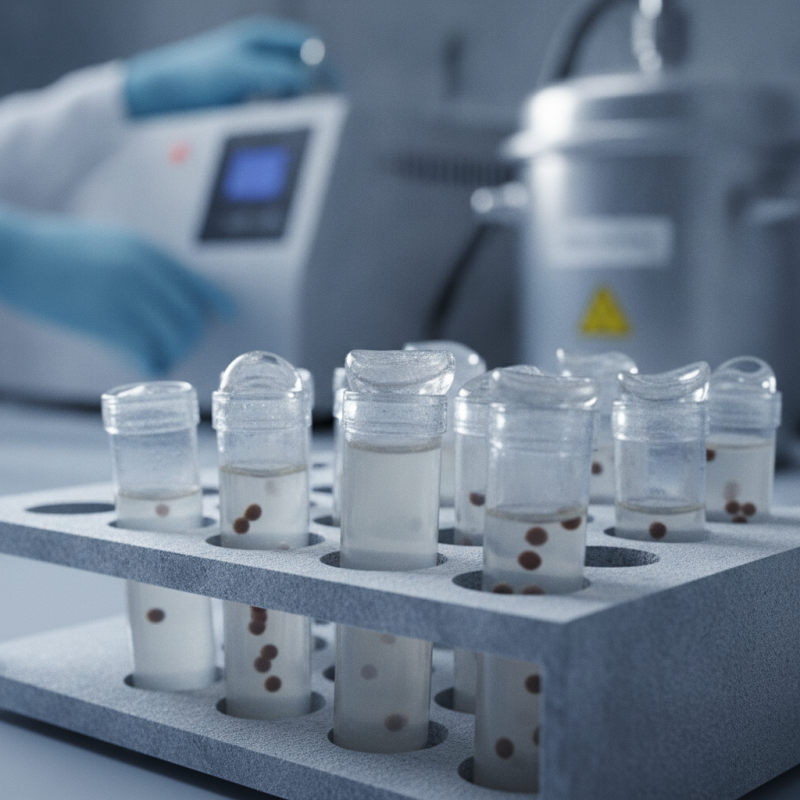
Cryovials are essential tools in biobanking and biological research. They serve the purpose of preserving cells, tissues, and other biological samples at extremely low temperatures. This preservation process helps maintain the integrity and viability of samples for future analysis or experimentation. Understanding the structure of cryovials is critical. These vials are designed to withstand cryogenic conditions, which often involve liquid nitrogen storage. The materials used in their manufacturing ensure durability and stability.
When filling cryovials, attention to detail is crucial. Overfilling can lead to pressure buildup during freezing. This pressure may cause the vial to crack or leak, jeopardizing sample integrity. Additionally, improper filling can affect the sample's concentration. It might create inconsistencies in future experiments. Researchers must balance filling volumes with the need for expansion during the freezing process. Effective handling practices help ensure reliable results in experiments. Proper training on filling techniques can significantly impact the preservation quality.
Proper filling techniques for cryovials are crucial in preserving sample integrity. Overfilling can lead to explosive failures during freezing. This can result in loss of precious samples. When cryovials are filled beyond their recommended capacity, they may not freeze uniformly. This can compromise cell viability and affect subsequent analyses.
It’s vital to leave appropriate headspace in cryovials. This space accommodates expansion during the freezing process. The ideal range for most vials is typically around 10-20%. However, many users overlook this step. A lack of awareness could lead to costly mistakes in biobanking and research.
Attention to detail matters in sample storage. Consistently check filling practices in your laboratory. Even experienced technicians can make errors under pressure. Regular training and reminders about proper techniques can be beneficial. Keeping samples safe and intact is worth the effort.
When cryovials are overfilled before freezing, several negative consequences can arise. Excess liquid may lead to pressure buildup during the freezing process. This can cause the vials to crack or leak. A damaged vial compromises the integrity of its contents. Sample contamination becomes a real concern, affecting future analyses.
Another issue is that overfilling can hinder the cryopreservation process itself. Proper freezing requires adequate space for the liquid to expand. Without it, ice crystals may form irregularly, damaging cells. This can result in reduced viability after thawing. Researchers may find that overfilled samples yield inconsistent results in experiments. Reflection on these potential pitfalls is essential for lab practices.
Understanding proper filling techniques is vital. Following guidelines helps ensure optimal preservation. Think about the balance between sufficient volume and safety. Aim for precision to avoid challenges. Every vial represents valuable resources; their proper handling is crucial for reliability.
When filling cryovials, precision is essential. Overfilling can lead to myriad problems during freezing. Liquid expands as it solidifies, which may crack the vial. Cracks can compromise the sample's integrity. This is something every researcher should reflect on.
Proper techniques ensure samples remain intact. A good practice is to leave some space in the vial. This prevents leakage and maintains temperature stability. Always measure the volume carefully. Using a pipette can minimize errors. Even a small mistake can have significant consequences.
Training on filling techniques is vital. Regular assessments of practices help maintain high standards. However, it's easy to overlook these steps in busy labs. Encouraging staff to revisit filling protocols can enhance sample integrity. Taking time now can save future troubles.
Overfilling cryovials can lead to serious complications during the freezing process. Liquid expansion occurs as samples freeze. If cryovials are too full, breakage may result. This not only compromises the sample but also creates potential hazards in the lab. Precision in filling is essential.
When preparing cryovials, consider leaving adequate headspace. Aim for about 10-20% empty space. This allows for expansion during freezing without risking damage. Use calibrated pipettes for accurate measurements. Avoid the common mistake of filling to the brim. It might seem easier, but it leads to unnecessary problems.
Another tip is to label each vial clearly. Include vital information such as date and contents. Using durable labels ensures information remains intact through freezing and thawing. Mistakes can happen, but learning from them is crucial. Regularly review your techniques and adjust based on outcomes. This will enhance reliability in your cryopreservation practices.
| Mistake | Description | Consequence | Tip to Avoid |
|---|---|---|---|
| Overfilling | Filling beyond recommended volume | Risk of burst during freezing | Adhere to volume guidelines |
| Inconsistent Filling | Vials are not filled uniformly | Inaccurate sample retrieval | Use a calibrated pipette |
| Not Allowing Expansion | Ignoring liquid expansion when freezing | Potential to crack vials | Leave headspace in vials |
| Contaminated Samples | Bacteria introduced during filling | Degradation of samples | Use sterilized equipment |
: Cryovials preserve biological samples at low temperatures to maintain their integrity for future analysis.
Incorrect filling can cause pressure buildup, leading to cracks or leaks that jeopardize sample integrity.
It's advisable to leave 10-20% headspace to accommodate expansion during freezing.
Overfilled cryovials can break, compromising samples and creating lab hazards.
Using calibrated pipettes helps achieve precise measurements and prevents overfilling.
Labels should include essential data like date and contents for easy identification.
Regular reviews help identify mistakes and improve reliability in cryopreservation practices.
Yes, reflecting on errors is essential for learning and enhancing future practices.
Avoid overfilling, inadequate labeling, and neglecting to leave space for expansion during freezing.
Inconsistent filling can lead to varying sample concentrations, affecting results in future experiments.
Cryovials play a crucial role in preserving biological samples by maintaining their integrity during storage. However, understanding proper filling techniques is essential to ensure the success of cryopreservation. What happens if a cryovial is overfilled before freezing? Overfilling can lead to issues such as pressure buildup, sample leakage, and compromised sample quality. To avoid these problems, it is important to follow best practices for filling cryovials, such as leaving adequate headspace and using appropriate techniques for sealing.
Additionally, avoiding common mistakes in cryovial preparation, such as failing to account for liquid expansion during freezing, is vital for maintaining sample integrity. By adhering to these guidelines, researchers can ensure that their samples remain viable for future analysis and experimentation, thereby maximizing the benefits of cryopreservation.
