Breeze Medical
Centrifugation is a critical step for serum separation in laboratory settings. Blood samples must be processed efficiently to obtain clear and reliable results. Dr. Emily Johnson, a leading expert in hematology, emphasizes, "Proper centrifugation affects the quality of serum." This highlights the importance of mastering the technique.
Understanding how to centrifuge blood samples for serum separation requires attention to detail. Optimal speed and time settings are crucial. A typical recommendation often falls between 3000-4000 RPM, with a duration of 10-15 minutes. However, variations may arise based on specific sample types.
Practitioners must consider the condition of the samples. Improper handling can lead to hemolysis or inadequate separation. Regular calibration of centrifuges will ensure consistency. Reflecting on these factors is essential for improving outcomes in serum analysis. Mastering this process not only enhances reliability but also builds trust in the results obtained from laboratory testing.
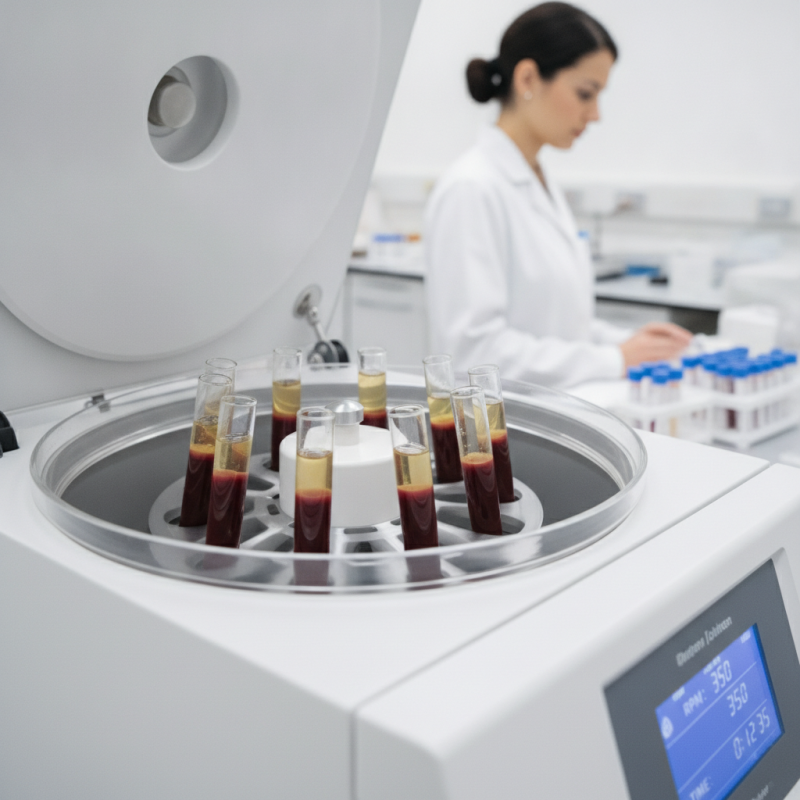
Serum separation is a vital process in clinical laboratories. It involves centrifuging blood samples to obtain serum for various tests. Efficient serum separation can greatly improve diagnostic accuracy. This step is crucial because serum carries essential biomarkers that provide insights into a patient's health.
Understanding the techniques for effective serum separation is important. The centrifuge's speed and duration must be precisely controlled. Improper settings can cause hemolysis or clots, leading to unreliable results. Timing is also key. Waiting too long before centrifugation can alter the composition of the serum. Some challenging samples may show unexpected coagulation patterns, which require troubleshooting.
Laboratories often face issues with serum quality. Variability can arise from temperature fluctuations during transport. Contamination is another concern; using clean, sterile equipment is essential. Regular training for staff can help minimize human error. It’s crucial to continually assess and refine protocols. Making these adjustments ensures the reliability of test results, supporting better patient care.
Selecting the right centrifuge is crucial for efficient blood sample processing. A centrifuge must have appropriate speed and capacity for various sample sizes. Look for models that support both small and large volumes. The rotor type also matters; fixed-angle rotors are commonly used for serum separation. However, swinging-bucket rotors ensure better separation for larger samples.
Consider the maximum speed and the RCF (relative centrifugal force) your samples require. Some workflows may need higher speeds to achieve optimal serum separation. In practice, lab staff often overlook the importance of maintaining the device. Regular cleaning and calibration ensure consistent results. It’s vital to educate team members about potential errors, like incorrect sample loading.
A centrifuge with improper settings or malfunctioning parts can lead to unseparated serum. Staff training in identifying these issues can improve reliability. It’s easy to take these machines for granted until problems arise. Therefore, developing a routine for checking equipment can prevent unexpected downtime and improve efficiency.
Centrifugation is crucial for serum extraction. The right settings can significantly affect the quality of your serum samples. Understanding these settings is essential for reliable results in many laboratory tests.
Start by determining the appropriate speed and duration for your centrifuge. Generally, a speed of 3,000 to 4,000 RPM is recommended for separating serum. This setting typically requires around 10 to 15 minutes of centrifugation. However, be aware that different sample types may respond differently. Experimentation might be necessary to optimize conditions for specific blood samples.
Temperature is also a critical factor. Keeping samples cool during centrifugation helps maintain the integrity of biochemical components. Aim for a temperature range of 4-10°C. Moreover, ensure that the tubes are balanced within the centrifuge to prevent equipment malfunction. A small mistake here can lead to sample loss or damage. Always reflect on past experiences to improve future processes. Small adjustments can lead to big changes in overall quality.
| Step | Centrifugation Settings | Time (minutes) | Temperature (°C) | Notes |
|---|---|---|---|---|
| 1 | 1500 x g | 10 | 20 | Initial spin for plasma |
| 2 | 3000 x g | 10 | 20 | Final spin for serum |
| 3 | 2500 x g | 15 | 4 | Recommended for cold serum samples |
| 4 | 3000 x g | 15 | 20 | Standard protocol for serum |
When preparing blood samples for centrifugation, proper techniques are critical for effective serum separation. According to recent industry reports, improper sample handling can lead to inaccuracies in test results. Accurate results are essential for patient diagnostics and treatment.
Before centrifugation, allow blood samples to coagulate fully. The recommended period is 30 minutes at room temperature. This process ensures the formation of a stable clot, reducing the risk of hemolysis. Employ standard collection tubes, as they help minimize contamination that can skew results. It's crucial to ensure that tubes are not overfilled, which can hinder proper clot formation.
Tips: Ensure that blood samples are mixed gently after collection. This minimizes bubbles and prevents hemolysis. Also, consider marking the time of collection on each sample. This practice aids in tracking how long each sample has been sitting before centrifugation.
Once the samples are fully coagulated, centrifugation can begin. Set the centrifuge to the manufacturer’s recommended speed and duration, typically around 3000 RPM for 10 minutes. This step is fundamental for effective serum separation. If not done properly, it can lead to imprecise measurements. Adhering to established protocols enhances the reliability of laboratory results.
When centrifuging blood samples for serum separation, issues may arise that affect results. One common problem is improper centrifugation speed. The ideal speed for serum separation is typically around 3,000 to 3,500 RPM. If the speed is too low, mixing may occur, leading to inaccurate serum measurements. However, going too fast can cause hemolysis, which can also compromise sample integrity. It’s crucial to calibrate centrifuge settings accurately.
Another frequent issue is temperature regulation. Samples should be processed at controlled temperatures, ideally between 18°C to 25°C. If the blood is not kept at the right temperature, clot formation may happen too quickly, affecting the serum yield. Sometimes, laboratories overlook this aspect, focusing instead on speed or time. Using a chilled centrifuge could help mitigate this risk.
Lastly, inadequate time settings can lead to incomplete separation. A typical centrifugation time ranges from 10 to 15 minutes. Some technicians underestimate this duration and stop the centrifuge too early. It's important to observe the separation clearly; ensuring a distinct serum layer is crucial for reliable analysis. Regularly reviewing protocols can enhance outcomes, revealing areas where improvements are necessary for consistent results.
: Consider speed, capacity, and rotor type. Choose models for both small and large volumes.
Fixed-angle rotors work well for serum separation. Swinging-bucket rotors are better for larger samples.
Generally, 3,000 to 4,000 RPM is ideal. This speed usually requires 10 to 15 minutes of centrifugation.
Keeping samples cool helps maintain biochemical integrity. Aim for a temperature range of 4-10°C.
Regular cleaning and calibration are crucial. It ensures reliable results and prevents unexpected downtime.
Incorrect settings can lead to unseparated serum. Staff training on proper handling is essential.
Yes, unbalanced tubes can cause sample loss or damage. Always check balance to avoid issues.
Educating staff about potential errors improves reliability. Reflection on past mistakes can enhance future processes.
The article titled "How to Centrifuge Blood Samples for Serum Separation Effectively?" provides a comprehensive overview of the serum separation process, emphasizing its significance in laboratory diagnostics. It begins by explaining the critical role of serum separation from blood samples, which is essential for accurate testing and analysis. The article then guides readers in selecting the appropriate centrifuge for optimal processing efficiency.
In a detailed step-by-step guide, the article outlines the necessary centrifugation settings required for effective serum extraction, ensuring that users can achieve reliable results. Additionally, it covers best practices for preparing blood samples prior to centrifugation, which are crucial for maximizing the quality of the serum obtained. Finally, it addresses common issues encountered during serum separation and offers troubleshooting tips, equipping readers with the knowledge needed to handle various challenges. Overall, this article serves as a valuable resource for anyone interested in learning how to centrifuge blood samples for serum separation effectively.